Lyoto "The Dragon" Machida |
||
Early lifeMachida was born in the city of Salvador as the third son of the highly ranked head of the Brazilian branch of the Japan Karate Association, Shotokan karate master Yoshizo Machida. Yoshizo moved to Brazil from Japan when he was 22 years old there he met and married Lyoto's mother, Ana Claudia. Growing up in Belém, Lyoto began training in karate at the age of three and earned his black belt at the age of thirteen. He also began training in sumo at twelve and Brazilian Jiu-Jitsu at fifteen. He won a number of amateur karate tournaments, including the 2001 Pan American Karate tournament. He was the runner-up in the 2000 Brazilian Sumo Championships in the 115 kg division. As an adult, he became Brazilian Champion twice, and placed second in the South American Championship. He defeated American black belt Jiu-Jitsu fighter Rafael Lovato Jr. at L.A. Sub X. In addition to his sumo and karate achievements, he has a college degree in Physical Education. Lyoto's brother, Chinzo, is a Shotokan vice-champion (Australia 2006), losing only to number-one ranked Shotokan master Koji Ogata. Lyoto and Chinzo fought in a Karate Final 10 years ago in which Lyoto gave Chinzo a cheek scar that still exists today. His other brothers include Kenzo Machida, a TV journalist for one of Brazil's biggest TV stations, Take Machida and adopted brother Francisco Machida. 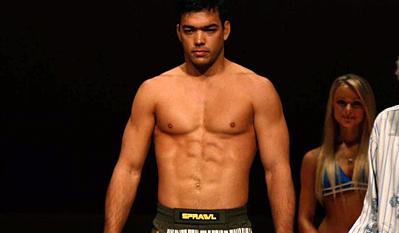 Fighting StyleMachida uses a unique style in MMA that combines elements from his diverse training background to make it as suitable for the sport as possible. Machida has received both praise and criticism for back-peddling in his fights while winning on points. It is based mainly on shotokan karate and brazilian jiu jitsu, but also has techniques from Wrestling and Sumo which Machida says makes him "fully prepared for any situation" in the Octagon. Often described as "elusive," Machida relies on cautious and precise counter-striking that frustrates his opponents into making mistakes. Machida has earned considerable respect from MMA fans, fighters, and commentators for his effectiveness and winning ways. At the same time, his cerebral and conservative style is sometimes deemed boring and unsatisfying to watch. Machida has drawn fire from fans, and criticism from MMA commentators for his limited aggression and many decision victories. In response to these criticisms, Machida said, "If you don't like it, sorry. I always try to win."He also stated that he believes fans are coming to appreciate the efficiency of his style just like they came to appreciate Royce Gracie's jiu-jitsu. Machida defied expectations at UFC 94, where he earned a "Knockout of the Night" honor for his first-round stoppage of then undefeated Thiago Silva. Machida noted that he started to include weight training in his preparation for the bout. Commentators hailed the knockout as a step in the right direction toward building interest in him as a potential champion. In addition, Machida showcased his improved English skills during interviews for the event, which gave him the ability to connect with fans more easily. Machida's limited English was previously seen as a marketing liability. After knocking out Rashad Evans at UFC 98, In the post fight in-ring interview with Joe Rogan, Machida announced to his fans, " Karate is back! Machida Karate." Many fans referred to his style as "Machida Karate" since then. In the November issue of the MMA Unltd magazine, Machida once again mentioned the phrase "Machida Karate", claiming that it was based on a very traditional form which is very different from modern sports karate. He also said that the Karate we see nowadays has lost many techniques over the years in which it was practised, and that his style was one of the very few that still kept those techniques. "My style isMachida Karate and it is a very traditional form", he said, "It differs from sports karate which we usually see in Karate schools and competitions as it has many elements which were lost in the style including the use of knees, elbows, takedowns and even some submissions". |
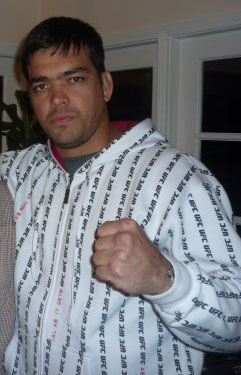 In college, Machida met Japanese pro wrestler and promoter Antonio Inoki. Because he saw potential in Machida, Inoki took him as a protégé and billed him as an upcoming star.Machida continued training by taking up Muay Thai in Thailand and wrestling at the New Japan Pro Wrestling dojo in Tokyo. Japanese media soon dubbed him "The Second Inoki." Machida made his MMA debut in Inoki's New Japan Pro Wrestling: Ultimate Crush on May 2, 2003, being billed as simply "Lyoto", where he defeated journeyman Pancrase fighter Kengo Watanabe by decision. He looked more comfortable in his follow-up fight against future The Ultimate Fighter 1 runner-up Stephan Bonnar, whom he defeated by cut stoppage. In his third fight, he faced 12–0 UFC veteran Rich Franklin as an underdog at Inoki Bom-ba-ye 2003. Machida knocked out Franklin with strikes early in the second round. At 3–0, he began to fight in K-1's early MMA efforts, with wins against two high-ranked K-1 kickboxers, Michael McDonald and Sam Greco. In his last match with the K-1 organization, K-1 Hero's 1, he faced the former UFC lightweight champion B.J. Penn, who was considered to be one of the top pound-for-pound fighters at the time, but who came to the fight at a significant weight disadvantage. Machida landed the cleaner shots en route to an easy decision, but did not gain much recognition for the victory due to his unwillingness to finish the smaller fighter. After permanently splitting with Inoki, Machida signed with a newly revitalized World Fighting Alliance and began to compete in the United States. In his American debut, Machida defeated Vernon White by unanimous decision at the WFA: King of the Streets event in Inglewood, California. After the WFA went out of business for the second time, the UFC acquired Machida's contract. 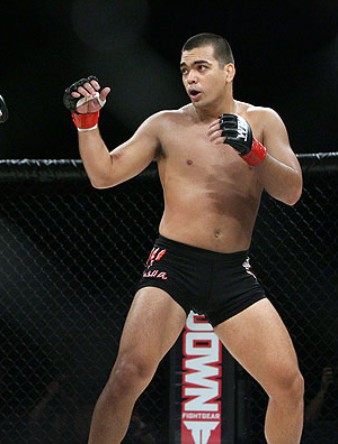 |
|
